
20 Questions

Ever play the game 20 Questions?
This was a favorite for Gen X kids. For starters, it was a great time-killer when nobody had smartphones or the internet, and it was naturally a classic road trip game. The idea was that one person would come up with something—literally anything was allowed—and then the other people would try to figure out what that thing was by only asking questions that can be answered with a yes or a no.
The person answering can only answer yes or no, too. At first glance, this might seem like an impossible task and an unwinnable game. After all, there are trillions of things in the world.
And yet, if you’ve played the game enough and are sufficiently clever, you probably already know that you can win just about every time, and often with far fewer than twenty questions. What’s going on here?
It turns out that anything and everything can be represented by lots and lots of these little yes and no answers. You start with all possible things, and quickly eliminate about half of the things right away with clever questioning. Don’t be the person who uses this trick with every game, but you can always fall back on asking whether the first letter falls in the first half of the alphabet (yes or no), and go from there.
One clever binary question only cuts down the possible outcomes by half, but if you ask enough of them in a row, you can refine down to any level of precision you want. You can draw an anthropomorphized goat-human face with yes and no answers, like this:
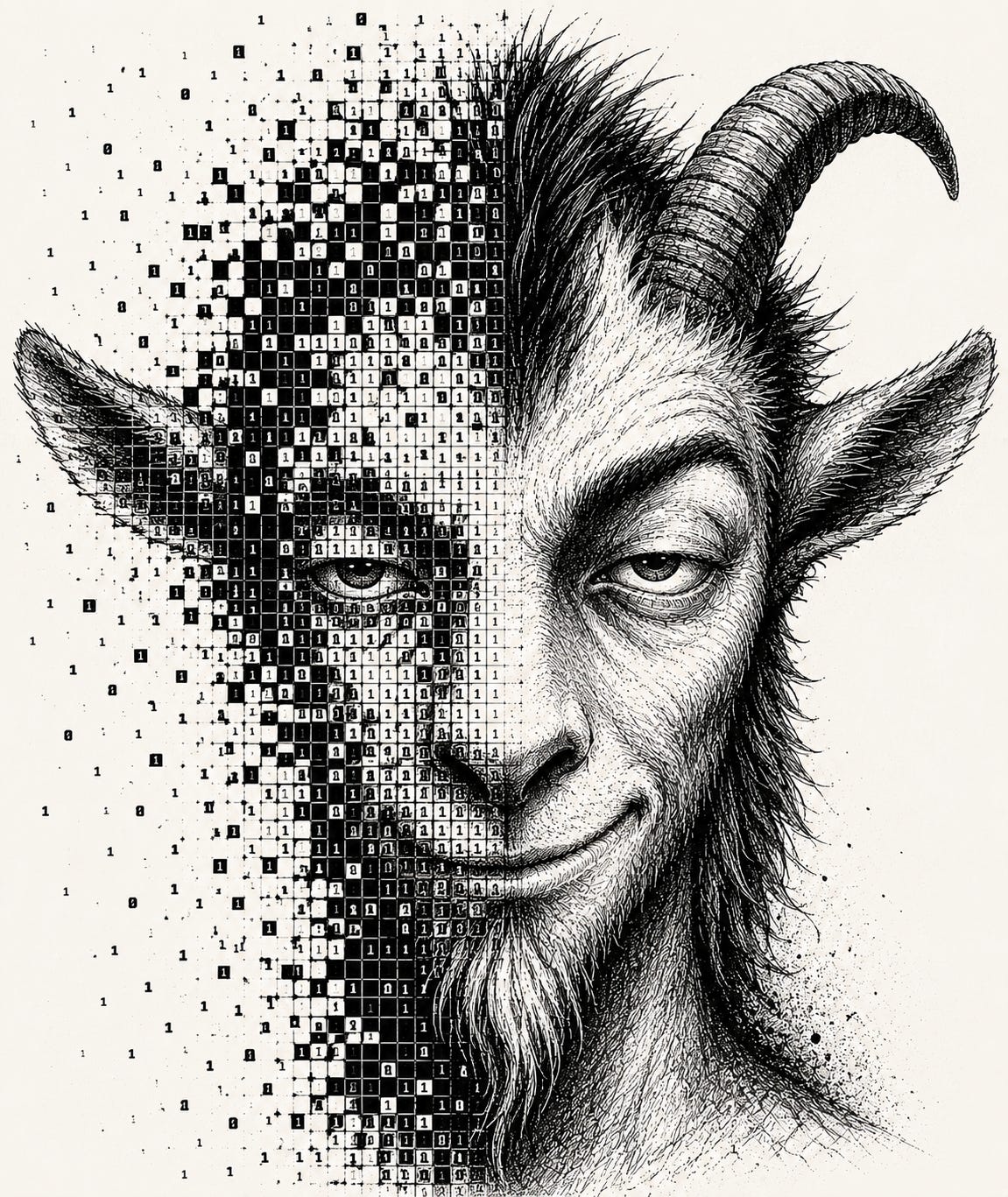
All these little things we choose to do every day? You know what I mean: what TV show to watch, where to sit, what to have for lunch—all of these are the result of tiny decisions you make all day. These might not seem like yes or no questions you’re answering, but if you zoom out and think about it, you’re doing the same sorting that happens with the game.
Sure, you heard about a show you wanted to watch just now and so you went right there. Still, you had to decide whether to do that right now, and even that involved a bunch of binary questions.
Remember the parable of the drunken octopus, and that anything can be answered now.
Think about what this means. If you can ask the right questions, you can find out all there is to know about just about anything. I can feel Daniel Nest rolling his eyes right now after beating this drum for years now, but it’s true: the skill you will need to survive the 21st century is asking good questions.
Is the above an animal?
Is it an item?
Is it a piece of writing?
Is it an article?
Is it a newsletter post?
Is it on Beehiv?
Is it on Substack?
Is this how you win the game?
Is this comment annoying?
Is it time for me to stop?
It seems we call the right questions “prompting” now…