
Angkor Whatnow?

Try to build something in the tropics or the jungle, and you’re going to have a constant battle with nature. Roughly a hundred years ago, Henry Ford used early 20th-century industrial power to try to tame the Amazon and to create a utopian town there, complete with a very large rubber plantation and factory. Even with the might of American industry and capital, this venture failed badly.
By contrast, another venture from nearly a thousand years ago, in the heart of the tropical region in present-day Cambodia succeeded. A civilization thrived there.
This was the Khmer Empire, sometimes also called the Angkorian civilization. The latter name comes from a single place, where the largest religious structure human beings have ever built still stands today.
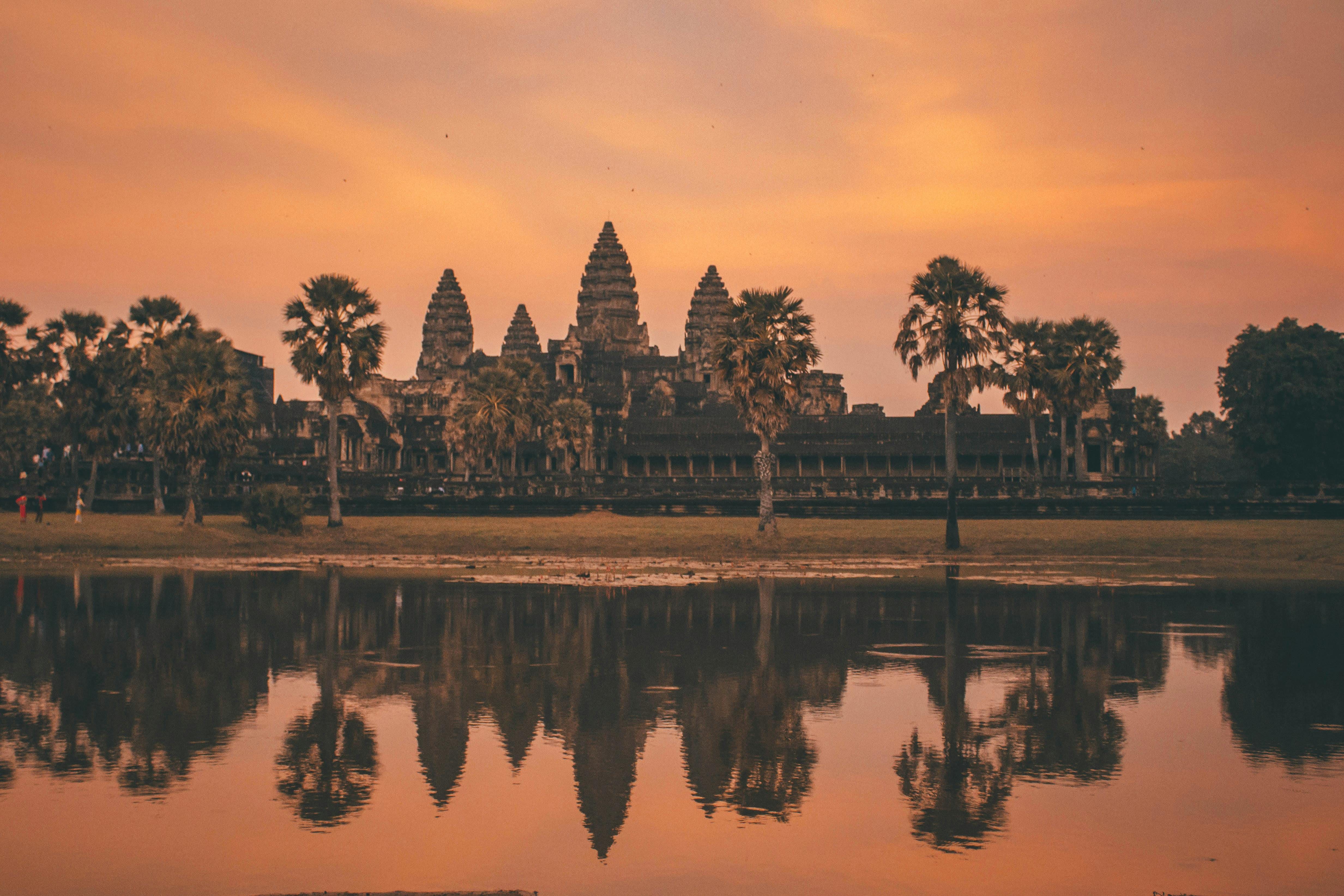
This stunning complex of temples reminds me of the Taj Mahal, but it predates that symmetry symbol by five centuries.
If you’re rolling your eyes and thinking about how pyramids in Egypt were built nearly five thousand years ago, and Göbekli Tepe in present-day Türkiye (Turkey if you’re from the US South) is thousands of years older still—I hear you! Angkor Wat is a fraction as old as these other impressive monuments.
One important thing is that Angkor Wat was built at or near the peak of the Khmer Empire. This contrasts heavily with the previous big monuments I mentioned—the pyramids were built during the Old Kingdom period, while Egypt would peak more than a thousand years later.
At Angkor Wat, you can see the masterful irrigation of the Khmer engineers, who used canals, reservoirs, dykes, and moats to manage monsoons. You can feel the power and prestige of the civilization near its apex.
In other words, Angkor Wat is a lot more like Machu Picchu than like Göbekli Tepe. Or, to use a modern example, it’s a bit like the Golden Gate Bridge or Hoover Dam.
Look in the Amazon jungle today, and you will see the ruins of a 20th-century attempt to tame nature on a grand scale. Look at the Cambodian jungle and you will see a civilization that succeeded nine centuries earlier.
One last note for today: if you enjoy origin stories about ancient civilizations, you might enjoy reading some of M. E. Rothwell’s excellent work over at Cosmographia. While I try to give you an overview, these are deep dives by someone who really cares about history, and has the ability to share that sense of wonder.
On a similar note, take a peek at Mike Sowden if you get a chance! He is always diving into fascinating stuff like this, but while I tend to put my keyboard down after my third cup of coffee every day, Everything Is Amazing gives a deeper treatment to each of the stories Mike finds interesting—and boy do we find a lot of the same things interesting!
I thought Mike stormed off Substack a while back because of Nazis? He didn't stay away long!
Some of the socks in my dresser are at least 40 years old. Perhaps, sometime in the near future, adult protective services will marvel at the durability of those mysterious boomers who once roamed the Earth.