

What’s the best single prediction ever made?
Best does far too much work here. Do we mean the most accurate? That’s what people usually mean when they say someone has made a good prediction, right?
But that test fails immediately, since it’s a kajillion-way tie at the top. Lots of predictions are 100% accurate, like when someone calls heads and a coin lands on heads. No, accuracy is only one qualifier for best.
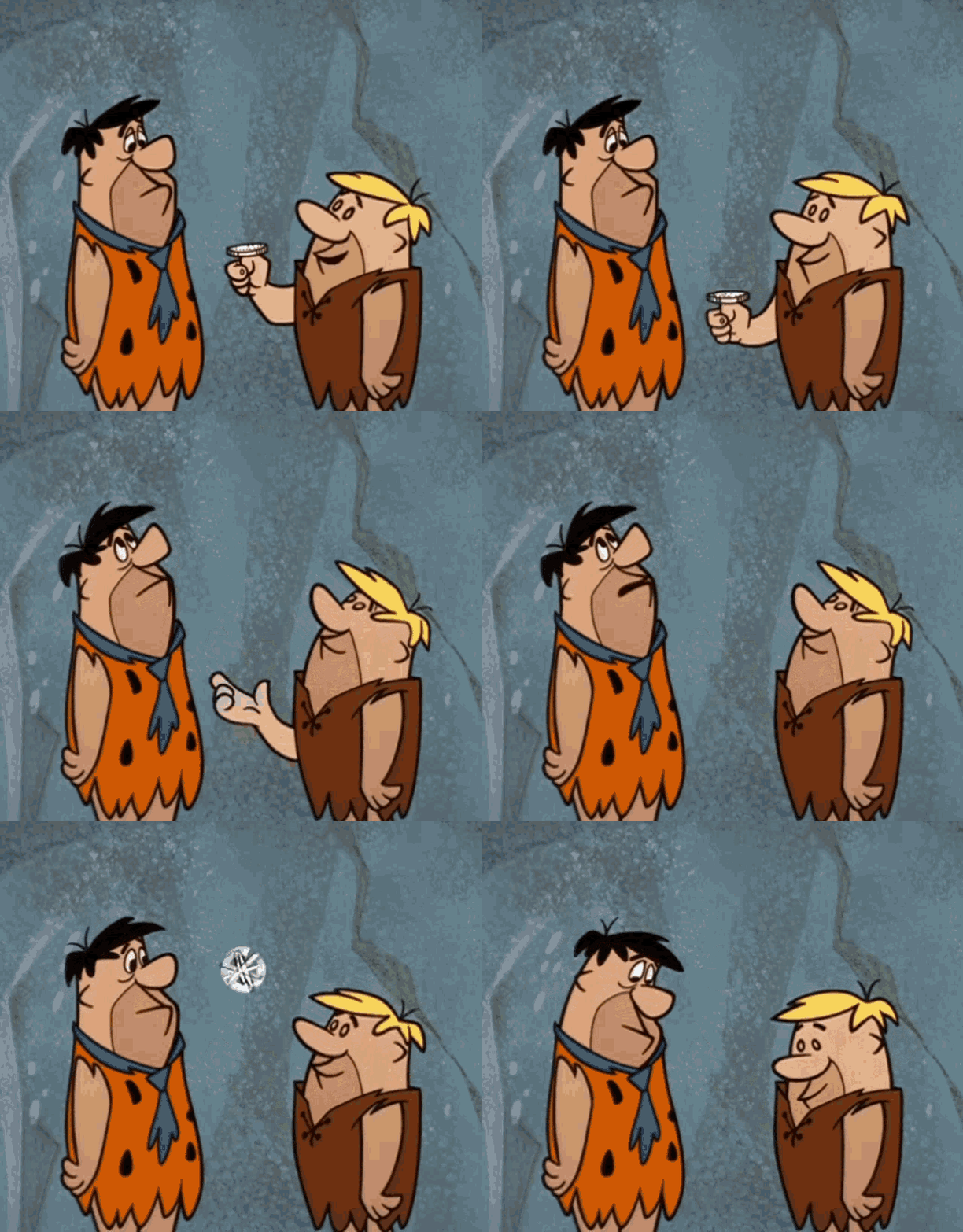
What we’re looking for is specificity, like when the 1898 novel Futility described an unsinkable ocean liner hitting an iceberg in the North Atlantic and killing nearly everyone on board because there were too few lifeboats. This was 14 years before the infamous Titanic disaster.
Okay, specificity, sure—but we also want an actual prediction, not a fanciful novel or statement of the way things might one day be. Predictions aren’t speculation about many future worlds so much as they are saying, with some confidence, that this is the likely direction we’ll head in.
You might be thinking of Nostradamus right now. It’s impossible not to whenever a big conversation about historical predictions comes up, and that’s for good reason: dude made an awful lot of predictions that are just vague enough to be interpreted as having actually happened. He ultimately fails the specificity test badly, though.
942 of his quatrains (poems) survive today, but none are specific claims about something that eventually happened. The most commonly cited example is the very real Great Fire of London, and here is the verse everyone gets really excited about:
The blood of the just will commit a fault at London, / Burnt through lightning of twenty threes the six...
Twenty threes the six seems like it could mean 66, right? It could mean a whole lot of other things, too. And hey, it’s not like Nostradamus said that there would be a fire in London in 1666 here. Maybe this “prediction” would be more impressive if the great fire had been started by a lightning strike.
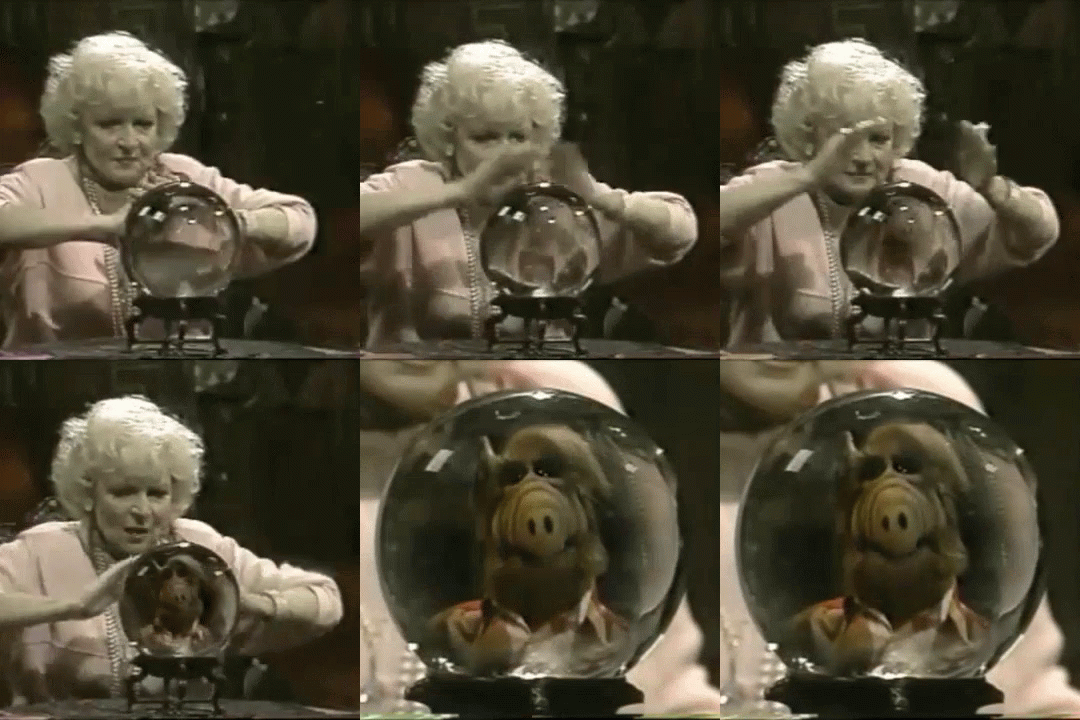
One final test needs to be passed for something to count as a truly great prediction: boldness, or difficulty in getting it right in advance. Predicting that ice will soon melt when it’s hot outside, or someone will soon be wrong on the internet? These are predictions, sure, but they’re not exactly bold.
Saying the ice wouldn’t melt would be bold. Saying the Sun won’t rise tomorrow would be bold. That would make you seem stupid.
I think the really good predictions sound pretty stupid when they’re first made.
Here are a couple predictions from astrophysics that blow my mind:
In the '40s and '50s, assuming the Universe was something like 10-15 billion years old and that General Relativity worked, Gamow and his students predicted a leftover heat of 5-10K. The real number is 3K, but that was a crazy awesome prediction for the leftover heat of the Big Bang that hadn't been discovered yet.
The other one that doesn't get enough press is the prediction of what elements formed in the first minutes of the Big Bang -- 75% H (by mass), 25% He, 1 atom of deuterium per 100,000, and 1-2 atoms of lithium per 10 billion (along with others). These are specific predictions of what we should see in primordial gas clouds covering 12 orders of magnitude, and it's *what we actually see* with small errors. That it's anywhere in the ballpark for all these elements simultaneously is just astonishing.
"Recency bias" plays a major role in many predictions not working out, because none of us can truly predict or manipulate future events. There are occasions when an individual or a product does live to the prediction of its enduring potential, but that has nothing to do with an early prediction of same.
Which is why the majority of these predictions are merely hype.