
NIMBYism

Not In My Back Yard!
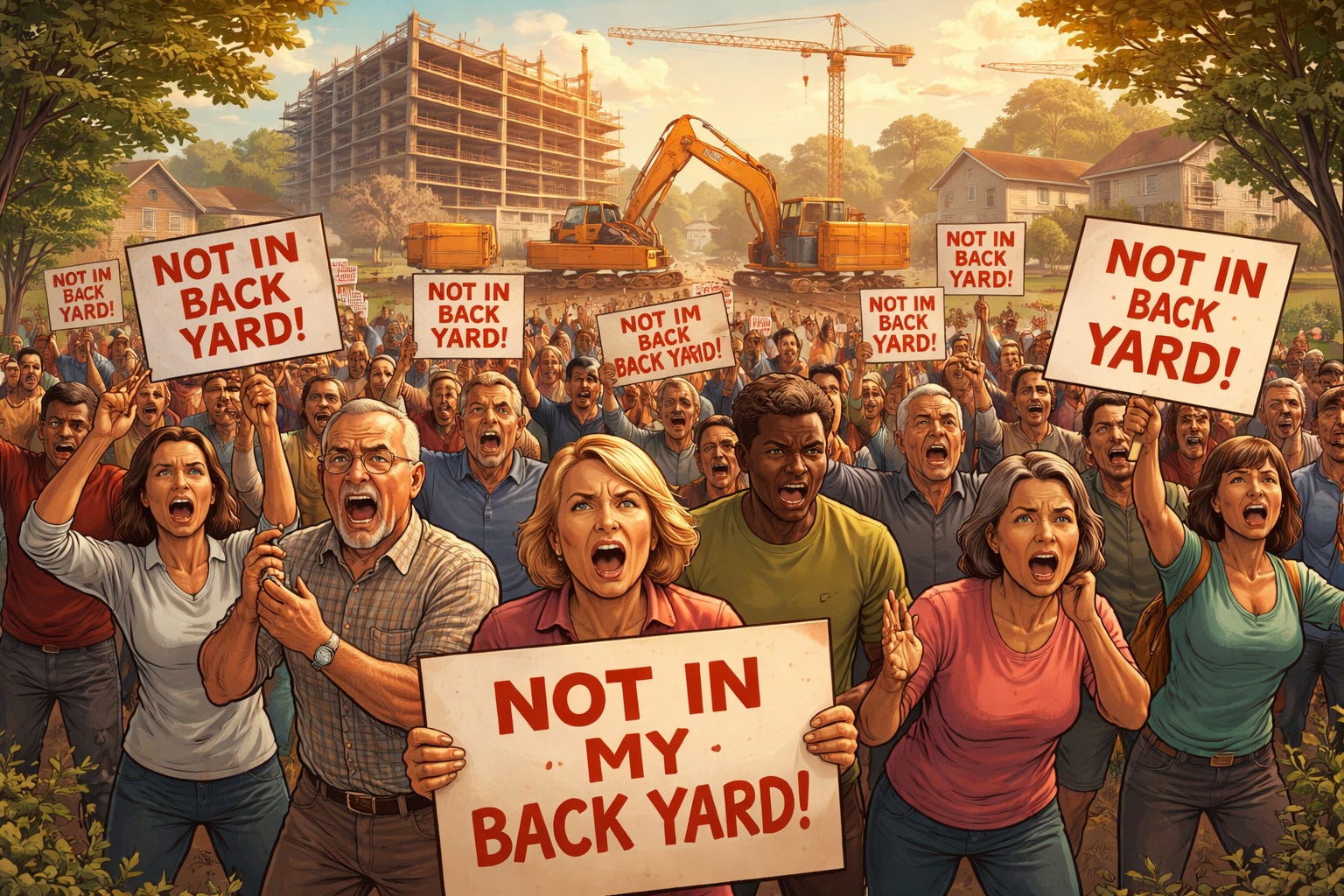
There has always been a tension between what’s in your best interest as an individual, as opposed to what’s in the collective best interest of society. This is often called the tragedy of the commons, and you already know this feeling well if you’ve ever had roommates:
At some point, you start playing a little game with one another, where you see how much you can get away with not doing. It’s definitely in your best interest to just wash those dishes and not think about how your roommate was supposed to do them for the next four hours, but that’s not what ends up happening.
This age-old tension spilled over into a new arena in the US after World War II. The nation was busily building new infrastructure, and in the haste to get things done on a massive scale, a lot of things fell through the cracks.
Suddenly, there was a massive federal government that was spending insane amounts of money. The scale and speed of industrialization during the Second World War was unprecedented, as car factories became airplane factories and rubber was rationed and repurposed at scale. After the war, this incredible financial and industrial firepower didn’t really slow down, as the collective west turned toward rebuilding Europe.
The spending and building party continued, and the military-industrial complex Eisenhower warned us about was here.
Now, there was a lot of support behind the federal government just after the war! After all, the Nazis had been vanquished and the Japanese had been defeated by said government, the government was seen as a valuable partner with initiatives like the GI Bill, where veterans would have their college paid for, and where housing needs were being met at scale, by an effective logistical machine.
This began to change during the late 1960s and early 1970s. For one thing, environmental science had begun to show irrefutable evidence of harm to humans from toxic waste.
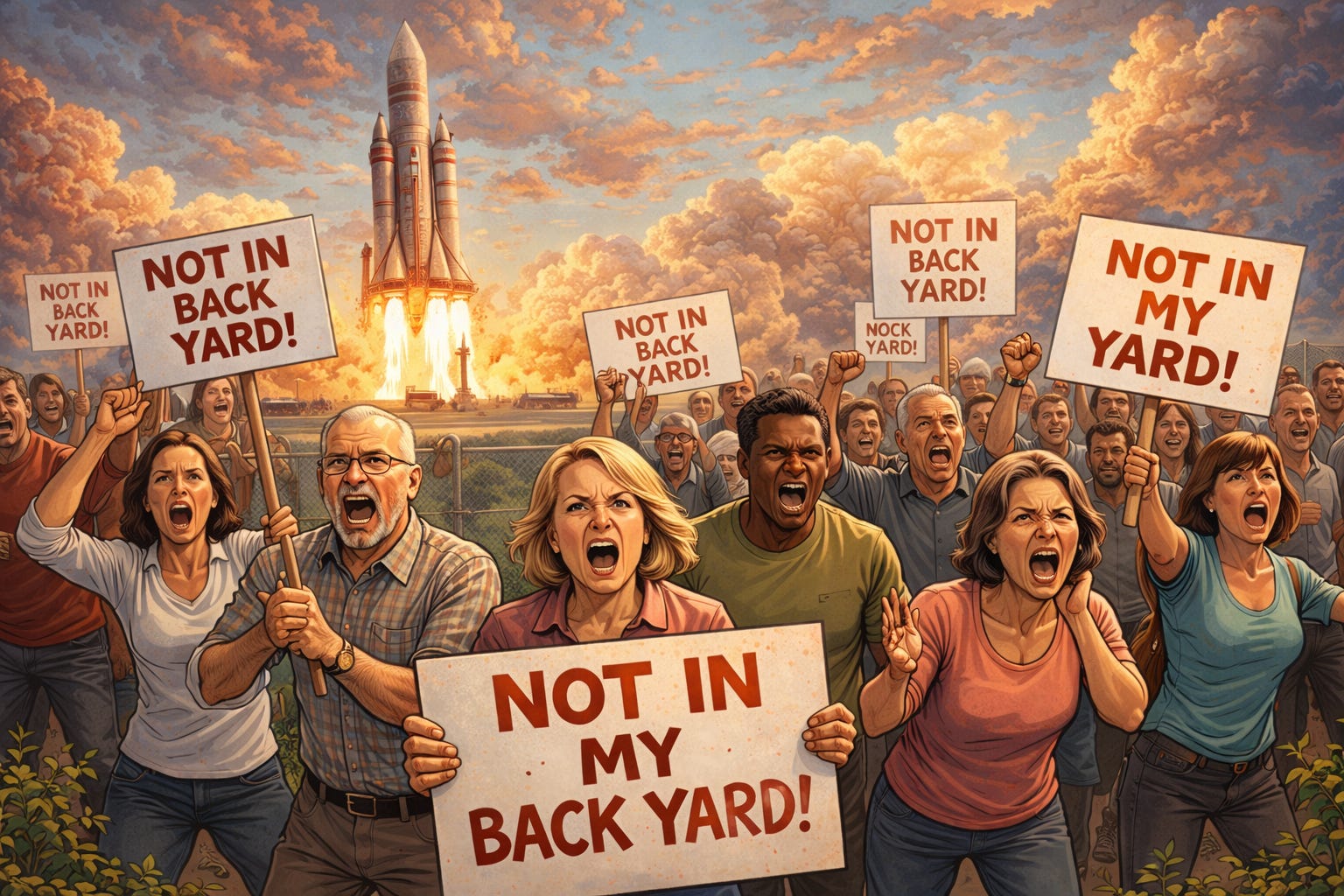
Parents weren’t about to raise their kids near any dumps or waste areas.
Similarly, people had begun to realize how much damage you could do by slicing a neighborhood in half, as the federal government had done via eminent domain. This disproportionately ruined poor neighborhoods of color, and people were beginning to see this as destructive.
If hearing the phrase urban renewal gives you chills, you’ve probably experienced something like this, where the federal or local government stumbles into a neighborhood, knocking over buildings and ruining businesses that have been there for generations.
What is it that turned NIMBYism from just a bunch of people complaining to an actual effective movement, though? Over time, the mechanisms of local government became a powerful tool of resistance—though it’s hard for me to celebrate a movement that ultimately makes things worse for everyone else.
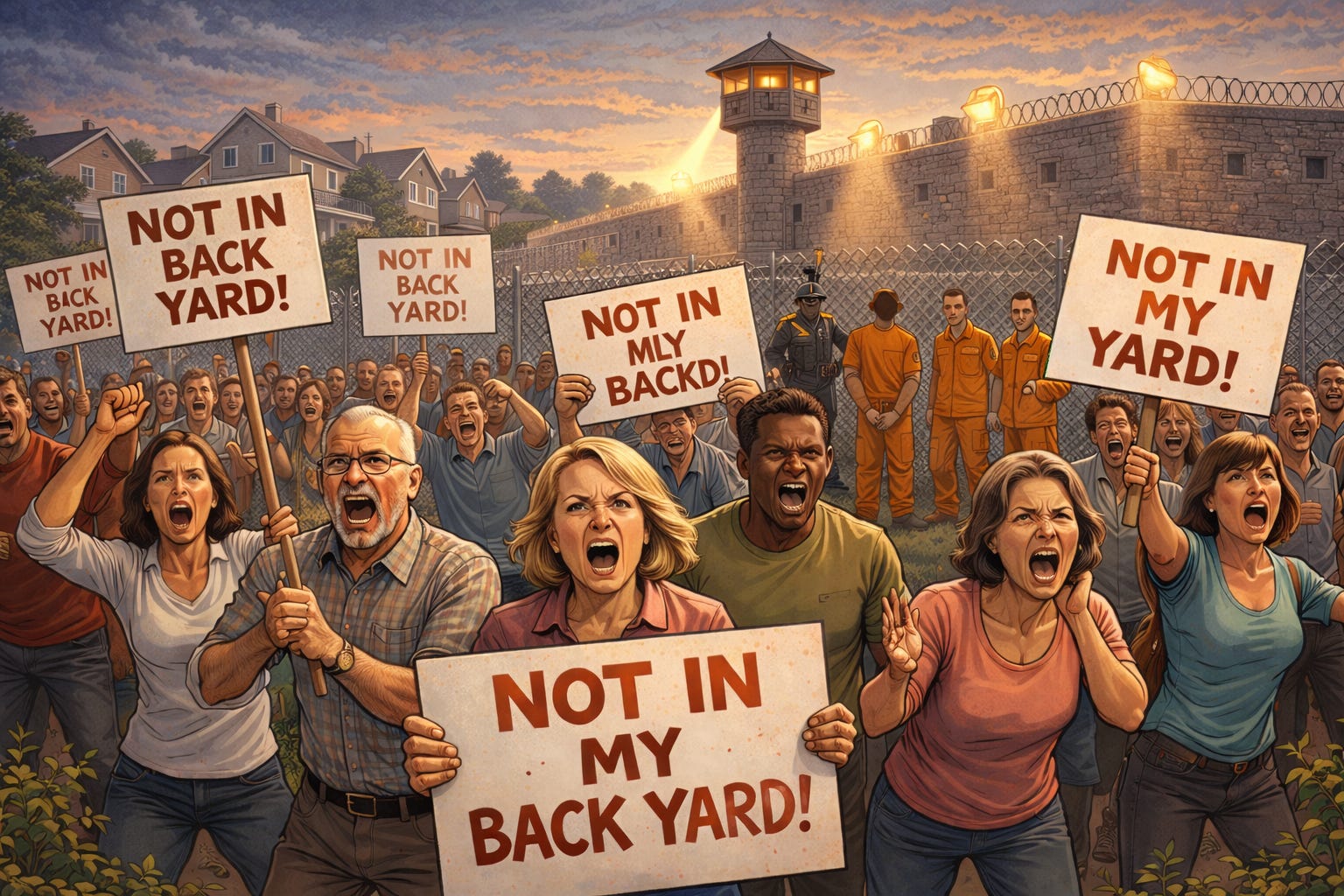
People used environmental science as evidence to sue, successfully preventing nuclear facilities, waste treatment plants, and many highways. The courts didn’t necessarily have to agree that there was harm being caused, as long as they could show that there hadn’t been enough work done to prove that a business or activity was safe.
Of course, most of these initiatives just ended up in someone else’s back yard anyway.
Little-known fact: Mayor Quimby from "The Simpsons" stands for "Quack In My Back Yard."
It's so little-known because it may or may not be completely made up on the spot, one minute ago.
NIMBY has an evil twin, YIMBY (Yes In My Back Yard), which happens when the people in a neighborhood support government initiatives instead of opposing them. Both of the movements have made major changes to the North American urban landscape over time.