
Spitting Around Your Hand

Art goes back a long way for us—and for me.
Like our ancient ancestors, I’ve been drawn (pun intended) to the idea of taking an image out of my head and inserting it into someone else’s head. This ability has fascinated me my whole life.
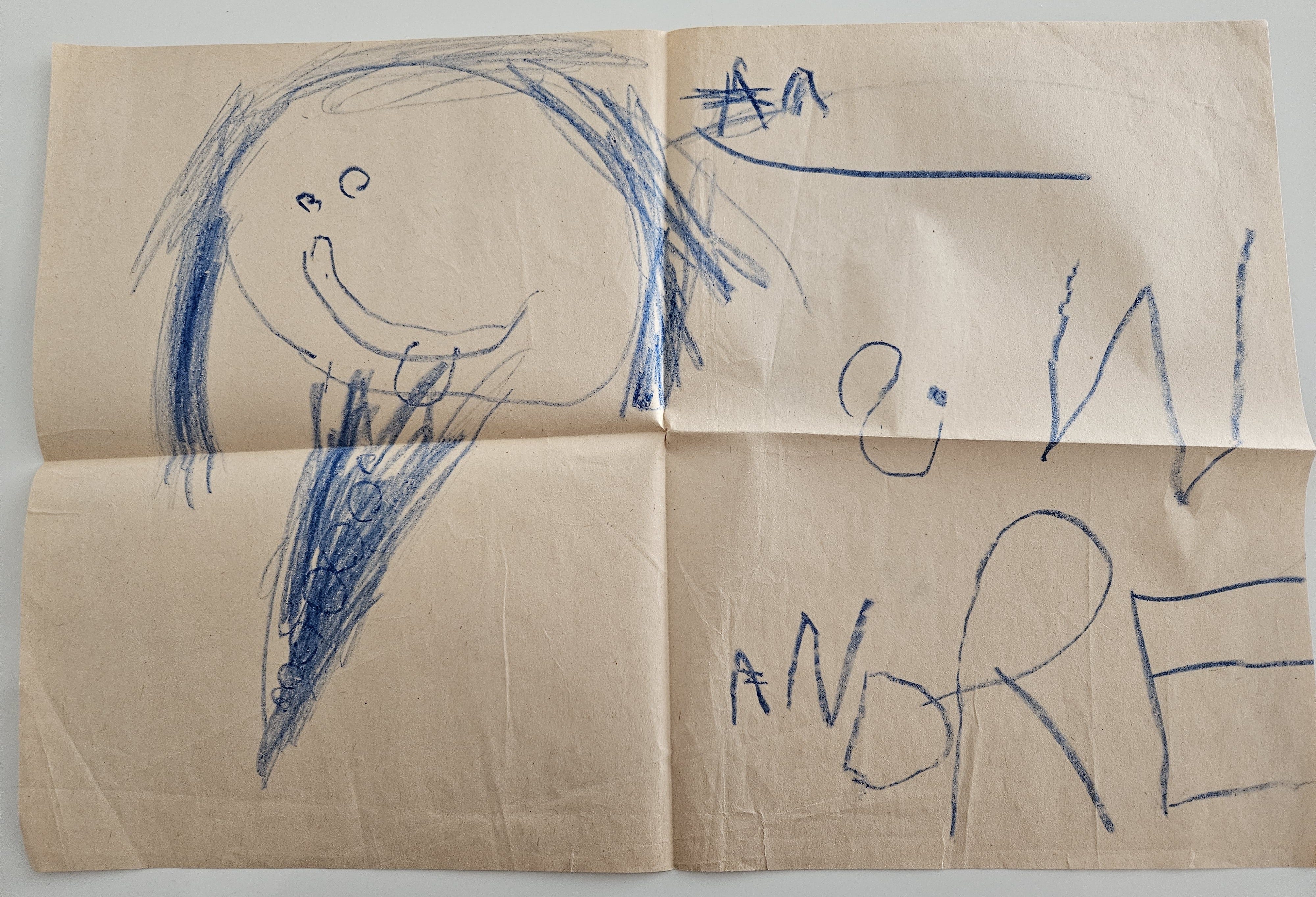
You can see that I was trying to figure out how to make forms and shapes as soon as I could make letters, and the images were a great deal more interesting to me than the letters. I’m going to blame my poor handwriting on this.
While fascination and wonder have driven me to make art since I was very young, our ancient ancestors had other motivations too. For them, painting was part anatomy class, part cautionary tale—all geared toward survival, not mere aesthetic appeal.
Of course, one has to wonder whether anyone believed those two things were separate. Our ancestors spent a lot of time making that art look good. Did they believe that if the bull was realistically enough rendered, its spirit would be captured and therefore easier to kill? It’s fun to speculate.
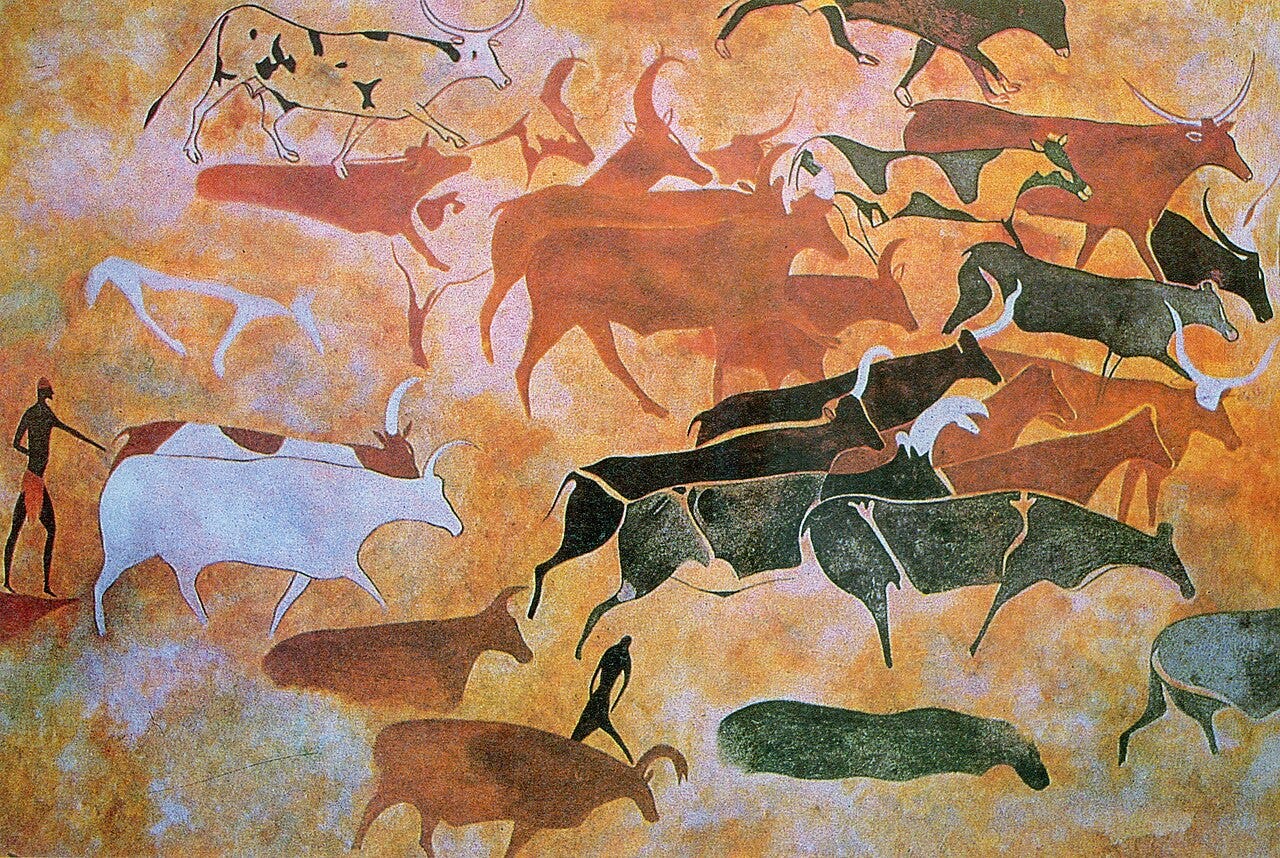
The scenes of the animals in motion make a lot of sense as cautionary tales, but what about art that doesn’t involve any specific forms besides the human hand?
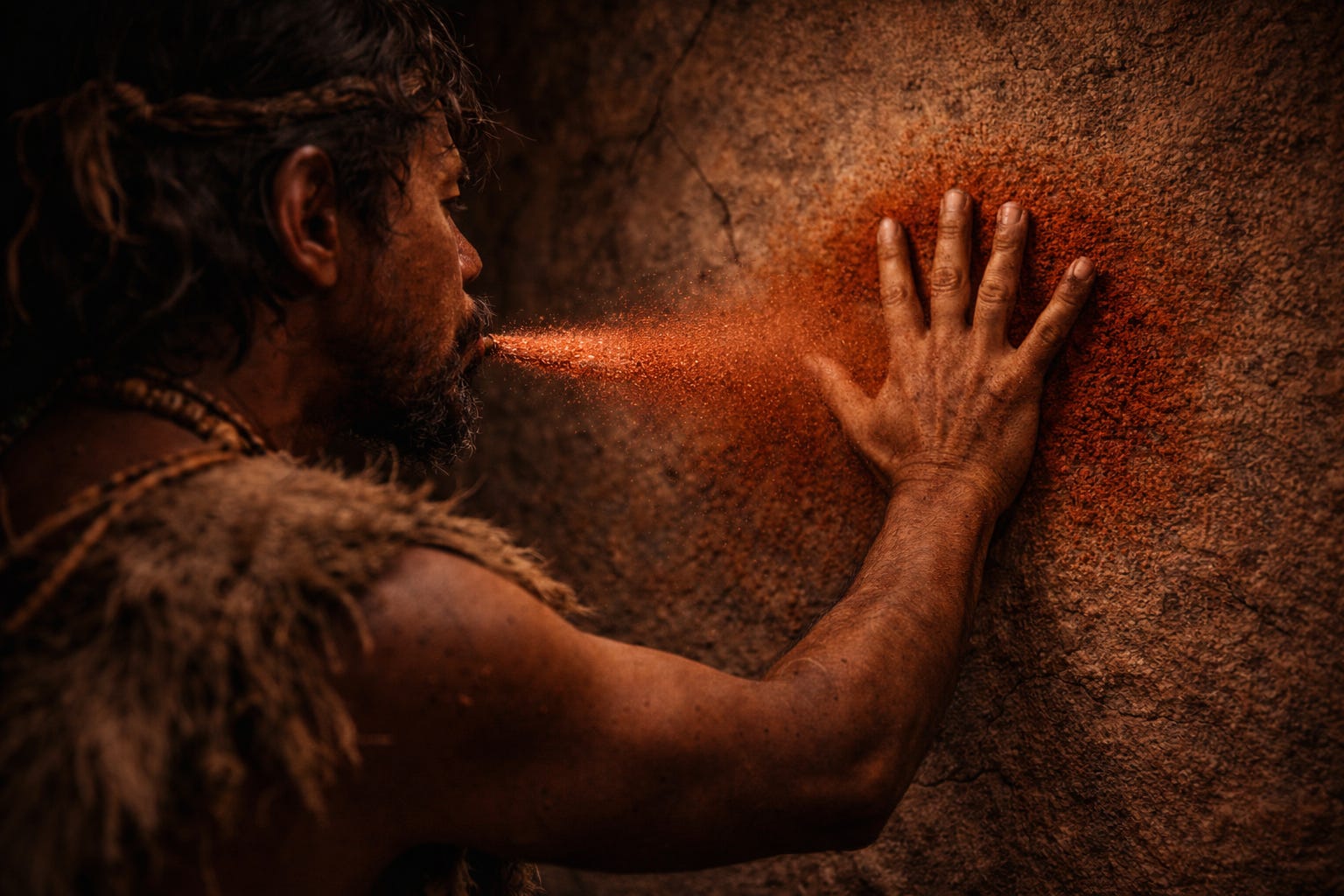
Animal art goes back around 45,000 years, but recent discoveries have pushed the “spitting around your hand” style of art back to around 67,000 years ago. Why hands? For one thing, they’re the perfect distance away—right in the middle of spitting distance, really.
For another thing, hands are more than just the ends of our arms.
The tools that we’ve been using for the longest amount of time are the ones attached to our body, and that certainly includes our hands.
Hands are crucial for toolmaking, and for survival more broadly. We communicate with them, gesticulate, tell a story. It strikes me as a natural thing to want to capture on a wall in a cave.
Capture they did. They placed a hand on the rocky wall, with fingers separated out like someone giving you an indication of the number five. Then, they collected ochre—clay with iron, so there’s a bright pigment—and mixed this with water (or saliva). Next step: they spit the ochre out around their hand and onto the wall, sometimes using a hollow bone or reed, but other times just swishing and spitting.
The saliva detail is what gets me. 67,000 years ago someone figured out that mixing spit with ochre was the right consistency for spray painting, which means they were iterating on technique not just slapping pigment randomly. That blurr between survival documentation and aesthetic choice feels super modern actually, like how dataviz people argue weather their charts are functional or beautiful.
Not enough stupid boner drawings. We know these exist for you from 5th grade, #ReleaseTheBonerFiles