
Splinter Movements

A splinter is a thin piece of wood that almost always breaks off along the grain of the wood. The grain is a long series of thin tubes of wood that are all bundled together as a single piece of wood, but these individual strips can be broken off as thinner, longer pieces.
It’s really hard to break off a piece of wood by going across the grain, isn’t it? Yet splintering just happens naturally. Sometimes, one of those thin pieces of wood can end up underneath the skin of your finger, and it can be quite an ordeal to get it out.

Splintering can happen any time you have this long, bundled type of structure. If you’ve ever broken a bone, there’s a good chance that there was a splinter—a longitudinal or stress fracture.
Splintering as a metaphor, then, works best when you have a sort of parallel structure to start with. That system (or whatever) is stronger along its bundled fibers, but those fibers always have the potential to break off on their own.
There have been some notable splinter movements throughout history. The Protestant Reformation comes to mind immediately, and it’s the classic example often used in history classes and in Substack essays.
Wittenberg University wasn’t an intellectual hub or a renaissance powerhouse at the time, but it did offer Martin Luther a chance to sharpen his ideas and observations about the Church. I use the Church here deliberately, to draw contrast with the way I’ve seen some other writers simply describe it as the Catholic Church. In western Europe, there was really only one type of church, and they all ultimately answered to the Pope in Rome.
Not for long!
Luther was seething. A Dominican friar named Johann Tetzel in nearby Jüterbog was busily running a campaign of selling indulgences.
This meant rich folks could pretty much buy their way into heaven, and when Luther and his crew realized that the Pope was deeply embroiled in this type of scandal, they decided they didn’t need a Pope any more. Now, there was the Catholic Church and the Protestant Church. Soon, the protestants would undergo their own splinter movements.

A couple hundred years later, the British Empire had its own splintering, as the American colonies broke away for good. Remember: these colonists were British, and the people who lived there were citizens of Great Britain.
It’s not like this was some invasion from the outside, or some kind of CIA overthrow by a hostile foreign power. No, this was the British themselves splintering off and becoming something new.
The early United States was notably different from Great Britain, to be sure. For one thing, there wasn’t a king or ruling monarch, but instead a regular old citizen who would be elected to represent the people, and there wasn’t a baked-in aristocracy or nobility like there was in Britain.
Still, the similarities outweigh the differences by a large margin. You can see that today in shared culture and language, and sometimes you’ll even get a British and an American version of TV shows (The Office and IT Crowd come to mind immediately). The American shows will typically splinter from the British ones.
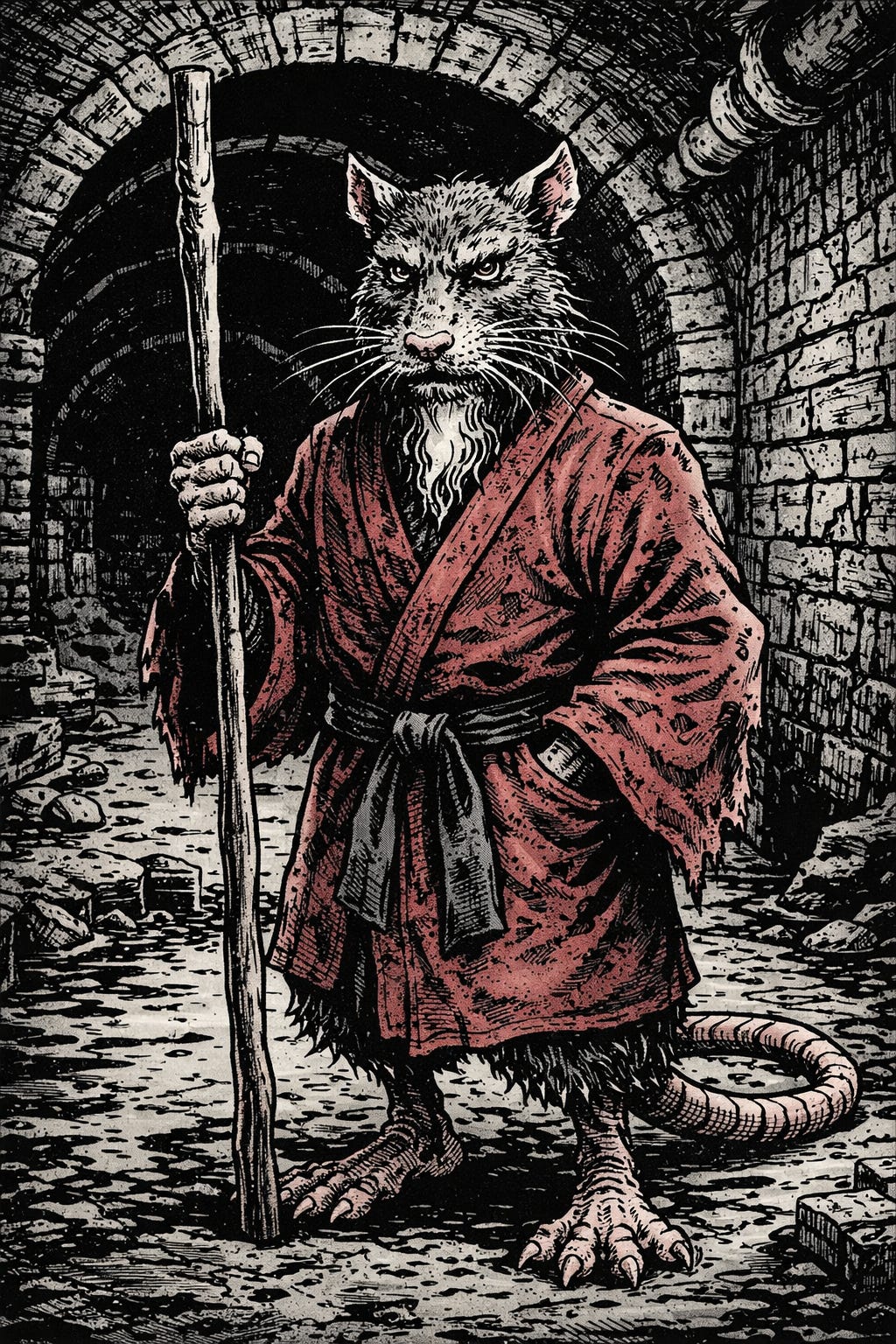
One American show that splintered from the original (American) source material was Teenage Mutant Ninja Turtles. That’s largely because they wanted to cash in on the craze and get the Turtles on television, by way of an animated series targeting elementary and middle-school kids.
Unfortunately, this meant completely whitewashing the behavior and essence of who the Turtles were: beer-drinking, swearing, violent dudes trying to find their way in the world. The animated cartoon, by contrast, showed them as airheads in the vein of Bill and Ted.
Cowabunga, dudes!
I find it humorous that people actually thought they could buy their way into heaven. It seems there was an over-estimate of the value of cash…