
The Dim Reaper

Something like 117 billion people have ever lived, give or take a few billion. That means a shocking percentage of us are here, alive today. A big part of this is our ability to live longer lives:
We don’t need to go quietly in the night as our ancestors did if there are other alternatives, and since the people alive today have access to far more ideas than at any previous time in our history, we don’t necessarily have to follow the rules of the past.
The common causes of death in the past need not be our causes, and we might be surprised at the new paradigms we can create. For the first several hundred thousand years of our existence, if we got an infection, we died. The last ten billion or so humans have been beneficiaries of antibiotics, extending human lifespans by years.
Still: death, uh, finds a way.

That is, it has found a way for everyone alive so far. “So far” must have been the part emphasized in the minds of everyone who ever tried to cheat death.
It’s not like radical life extension is a new concept.
According to legend, the first emperor of unified China died of mercury poisoning, after taking pills that were intended to give him eternal life.
Terracotta soldiers were built to protect the first Qin emperor, and I got to see some of them when they were on loan in Virginia. Most famously, ancient Egyptians used spices to preserve bodies that would be used in the afterlife.
As people continued to grasp at immortality, they found useful examples in the animal kingdom. One of these has become something of an internet meme: the so-called immortal jellyfish:
Unlike other jellyfish, if a Turritopsis dohrnii medusa gets injured or faces imminent death, it can do something truly incredible. Instead of dying, it reverts back to the polyp stage. This allows the jellyfish to survive virtually any undersea conditions, and it can “heal” itself by simply re-forming every cell.
This is called transdifferentiation—taking a cell and transforming it into a different type of cell—and it’s a hot topic of research in human stem cells right now. For jellyfish, it means they theoretically have the ability to repeat this cycle indefinitely, just hitting the biological reset button on occasion, watching the eons pass.
What if humans could use some of these tricks from the animal kingdom to live longer? That’s a question scientists and alchemists alike have continued to ask for thousands of years.
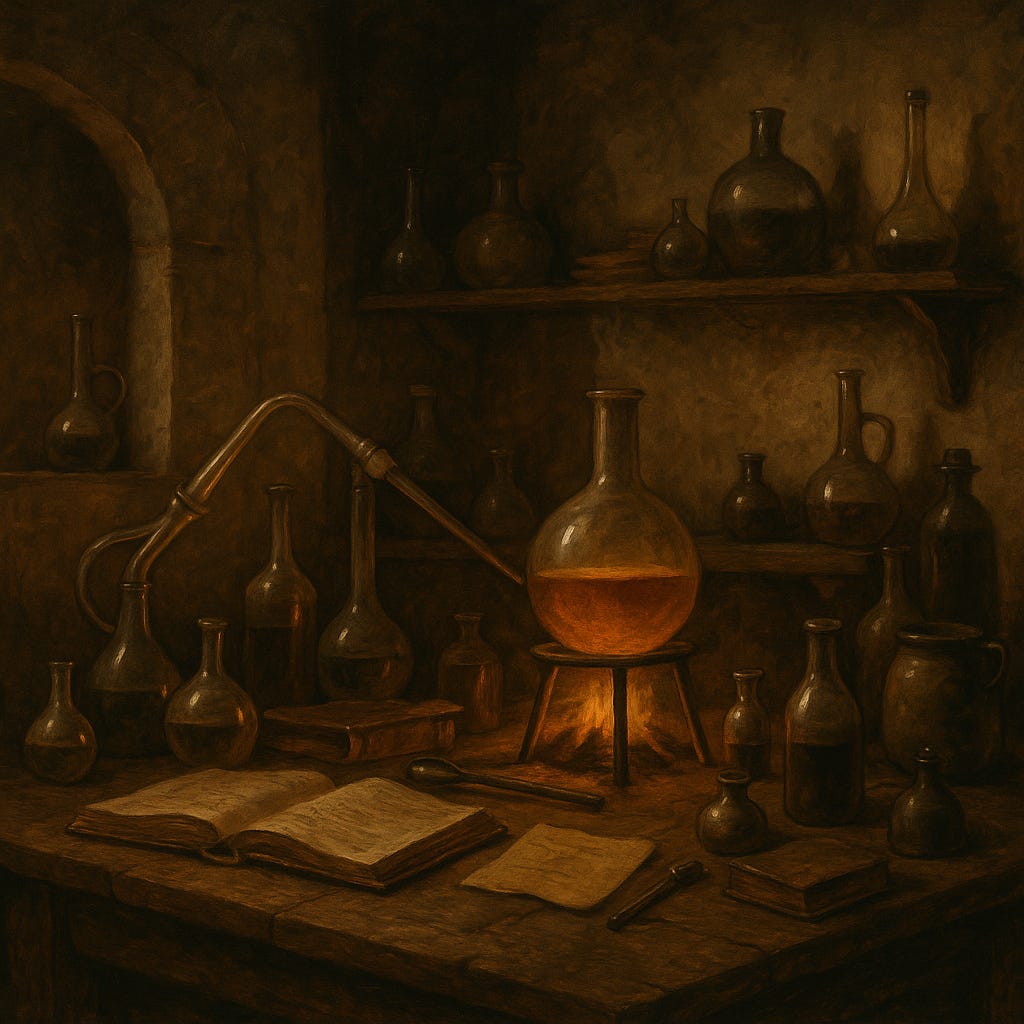
A somewhat modern answer to this question comes from cancerous cells scraped from the cervix of a poor Black woman in Baltimore, Maryland in 1951.
These cells came to be referred to as HeLa cells, and they have undoubtedly saved millions of lives.
Cancer cells are characterized by uncontrolled division and a lack of normal cell death. HeLa cells have an added mutation… that allows them to bypass the gene for uncontrolled growth, yet remain able to reproduce indefinitely.
Those 73 year old cells are still alive, still helping with research. Those telomeres are still being rebuilt every time.
Much more recently, our entire genetic code has been mapped. This means that we can now begin to locate which genes cause what, and that includes all sorts of things that kill us. Even wilder, we can now edit parts of our code and modify them permanently.
Besides biology, there’s the wilder-still idea of integrating your mind with technology. If that sounds like a total non-starter, I get it, but also: I have really bad news. Your mind is already deeply integrated with technology, and you rely on it to think all the time.
This has everything to do with cognitive offloading:
When you wave your hands about in the air, you’re making little symbols with the shapes you build. As strange as it may sound, these symbols are doing some of the work your brain would normally be doing here.
This is a bit like how a computer has RAM (Random Access Memory) that it uses in order to store and access pertinent little chunks of temporary information. RAM might store the last thing you copied, for instance, and it doesn’t make sense to rewrite the permanent memory for something you probably won’t need for longer than a few more minutes.
So, like, could you just upload your mind? Not so fast—there are plenty of thorny issues centering around continuous consciousness and identity that I really don’t want to get into today, but you’re more than welcome to go down the rabbit hole with Past Andrew:

I’m not saying death isn’t inevitable, but maybe I’m saying that death isn’t all that bright. Maybe you can cheat death for a little while, especially with the promise of the present day. Not everyone will benefit equally from these innovations, but on balance, more humans are going to be living much longer.
Hang in there if you can.
"So, like, could you just upload your mind? Not so fast..."
Not in real life. But science fiction has created many stories about people who have had their minds into new vessels when their bodies die, or about animals whose minds are "uplifted" into the realm of human-like intelligence. This is what the real scientists want to emulate.
AI's gunna be kickass here! I went down this rabbit hole a smoosh in that article I wrote on DNA testing. I. Will. Live. Forever