
When Did History Begin?

Here’s a good question for you: when did history begin?
I want to approach this from two different angles today. First, there’s the question of what academics and historians consider the domain of history. This is a very strict and obvious interpretation of the word history, but the idea is that if it’s written down, it’s history.
What about all that stuff that happened before writing, like Göbekli Tepe or a Venus figurine from more than 10,000 years ago? The cultures who produced those items are a very important part of our story, but since they predate written language, they fall into the category of prehistory.
If it wasn’t written down, it’s not history. This distinction is important, since it implies that history only goes back about 5000 years, but humans have been walking around the planet in various forms for six million years.
As the budding disciplines of archaeology and anthropology unearthed relics and remnants from even more bygone eras—tools, cave art, and age-old artifacts—it became clear that the story of human beings stretched far beyond the confines of written history.
This burgeoning field of study demanded a term, a label, and thus “prehistory” was born.
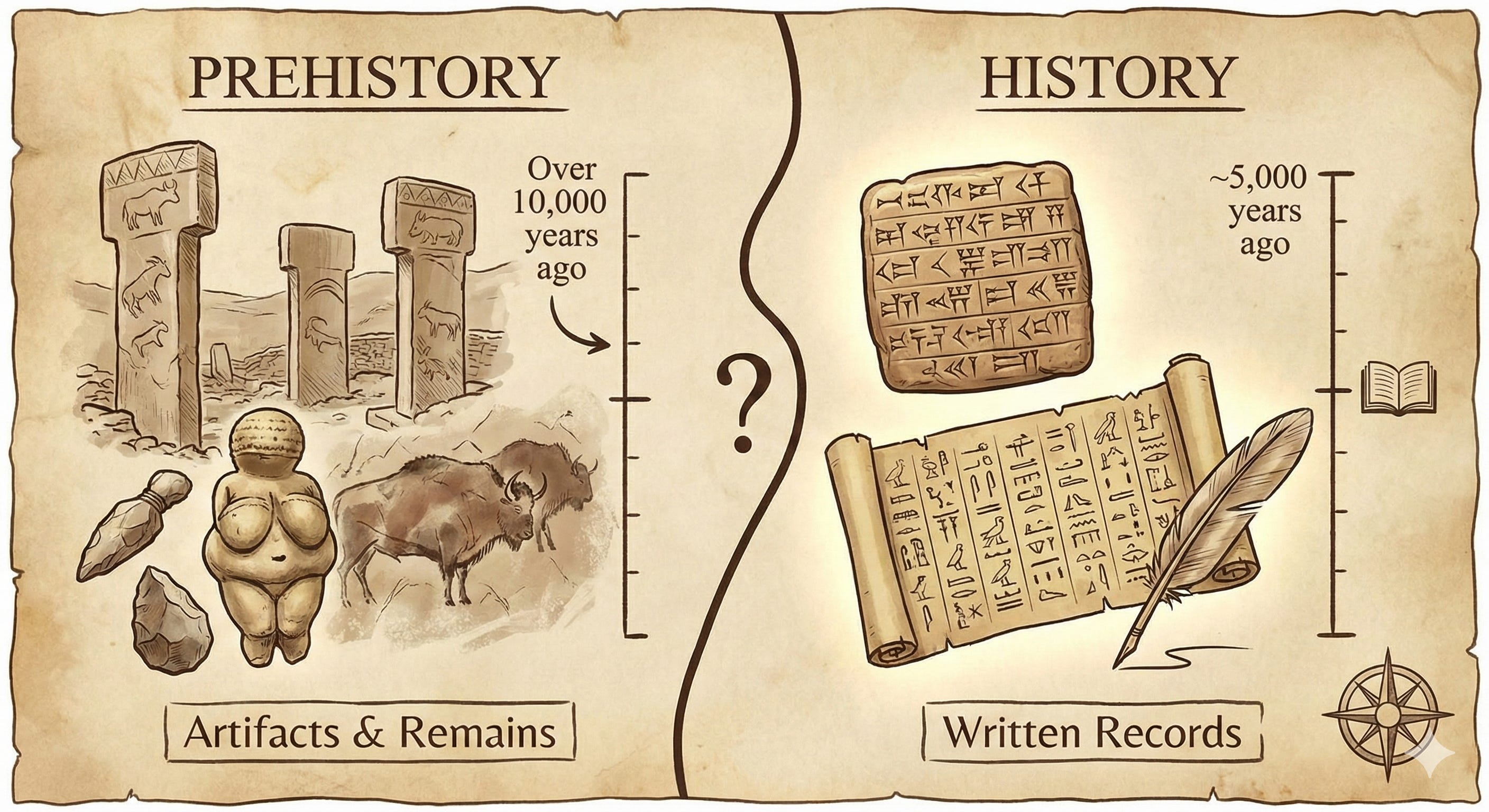
This would be a pretty short essay if that was the only definition worth talking about: since writing began about 5000 years ago, give or take, this is when “world history” truly begins. When regional history begins depends on when writing took hold in that particular area.
The other way to answer when history began is to describe when the study of history became a thing. This is the moment where we (human beings) stopped merely looking at the things we had written down and taking them at face value.
Prior to Herodotus nearly 2500 years ago, there would be long lists of kings and gods just blending right in together. Let's just say there was not a lot of BS-detecting going on. Herodotus got down into the nitty-gritty, comparing different accounts and looking for support for stories.
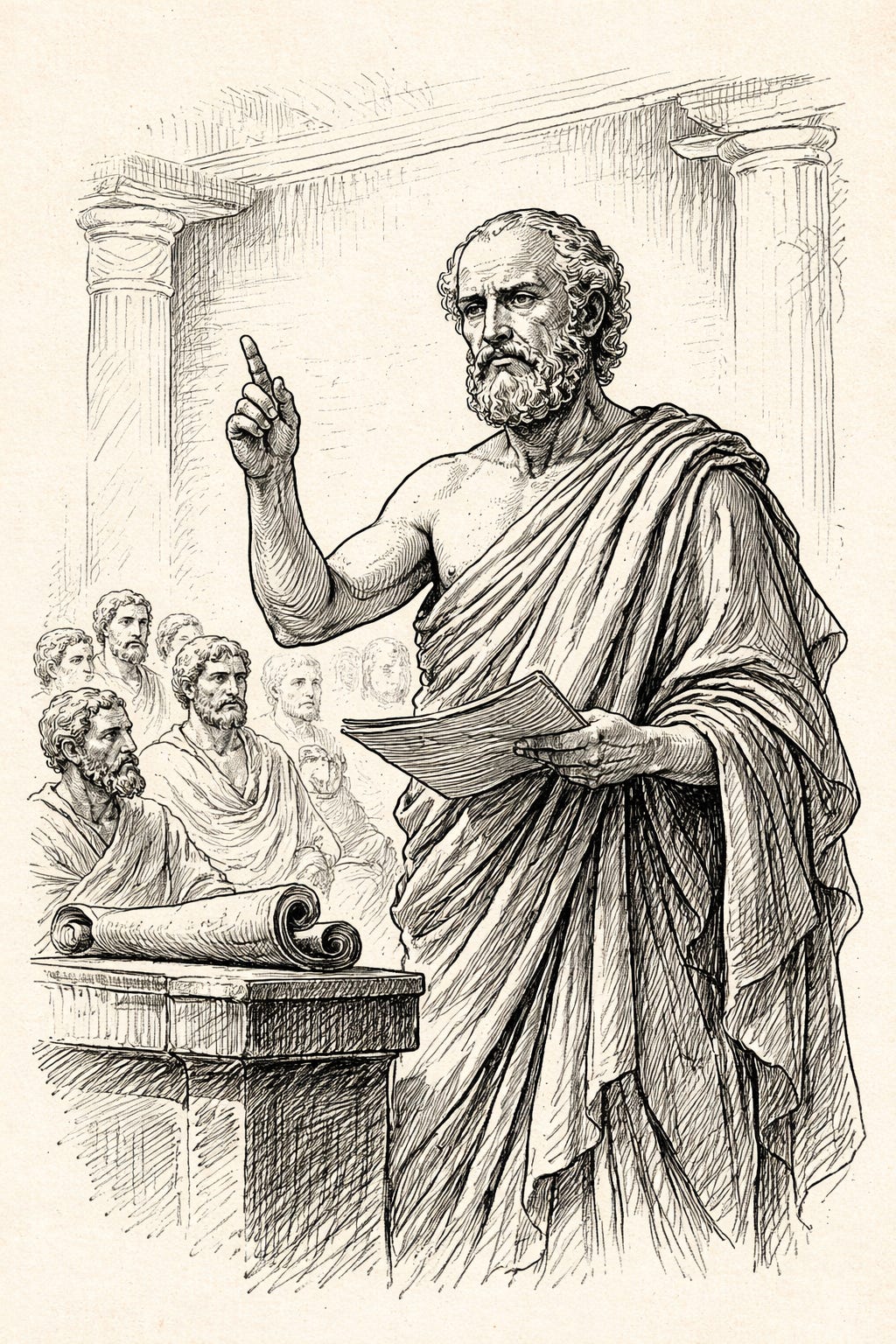
Thucydides, his intellectual successor in Ancient Greece, took this much further—while side-eying the writings of the past, he demanded eyewitness testimony, and examined the causes of major wars and political events. Figuring out why something had happened added a causal detective layer.
Thucydides even faithfully recorded events in real time himself, as he wrote the History of the Peloponnesian War about the conflict between Athens and Sparta. Now, others could copy his methods both for recording and for interpreting information. History was born.
When did history begin?
It really depends on what you mean by the question.
When did history begin?
In first grade, in my case.
I found much enjoyment reading this article Andrew, thank you.