
Derivative Works

Andy Warhol shocked the world when he painted soup can labels onto canvas and called them fine art.
Twenty years later, hip-hop artists began using samples from existing work, perplexing the legal system for decades to come.
Another forty years later, and AI is in the hot seat for copying someone else’s homework.
It seems jarring for our legal system to turn a blind eye to this, especially in a world where we try to protect intellectual property so fiercely. What about the competing adage that information wants to be free, and if an idea is useful, it’s going to be used?
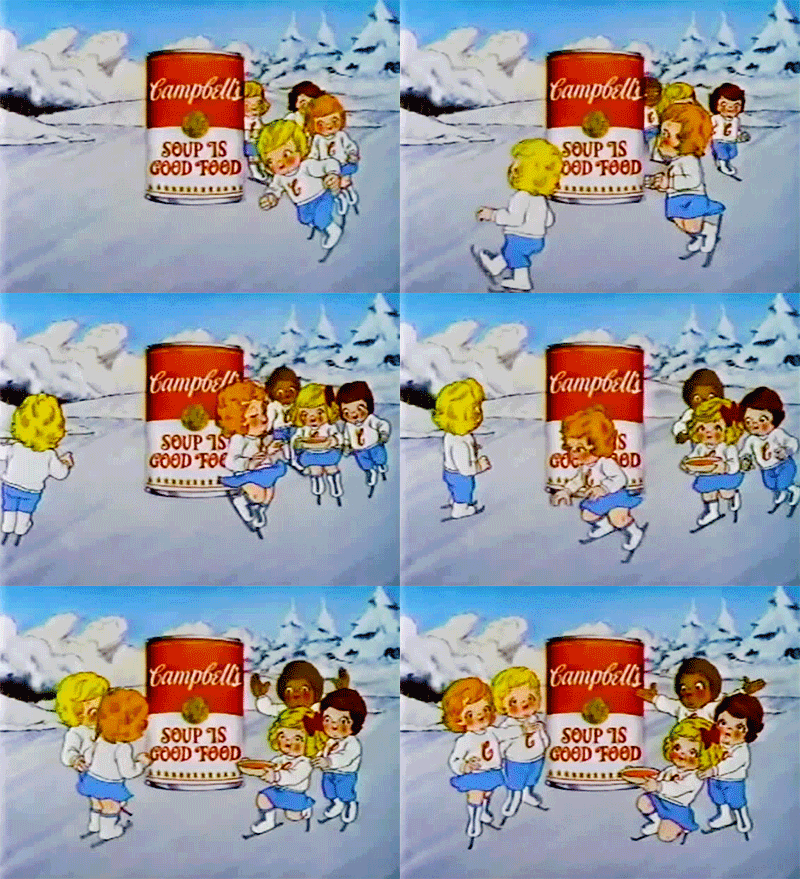
This tension is a lot older than soup cans and hip-hop.
Art was not independently invented in thousands of places around the world, but instead, someone came up with the idea to spit some paint around their hand. This was copied again and again, and someone else had the idea to paint something without using the hand as the model. Suddenly, artistic animal forms were everywhere.
Likewise, written language may have sprung up independently in a few spots around the world, but once it was invented in a spot, it was all about copying the idea.
Derivative work is a term of legal art that has a strong negative connotation attached to it, but original works of any sort are always derivative works (in the non-legal sense) when you get down to it.
It also has "a negative connotation" because it's very often lazy and the people doing it want to be applauded as if it were original.
And sometimes the value of an invention is only when it's widely adopted. Email or Substack are more profitable if everyone is on them.
But, Andrew, let's make this personal.
How much of this post could be copied without attribution to you before it becomes wrong instead of an hommage?
😉
…and thence we have judges.