
Touring with Turing

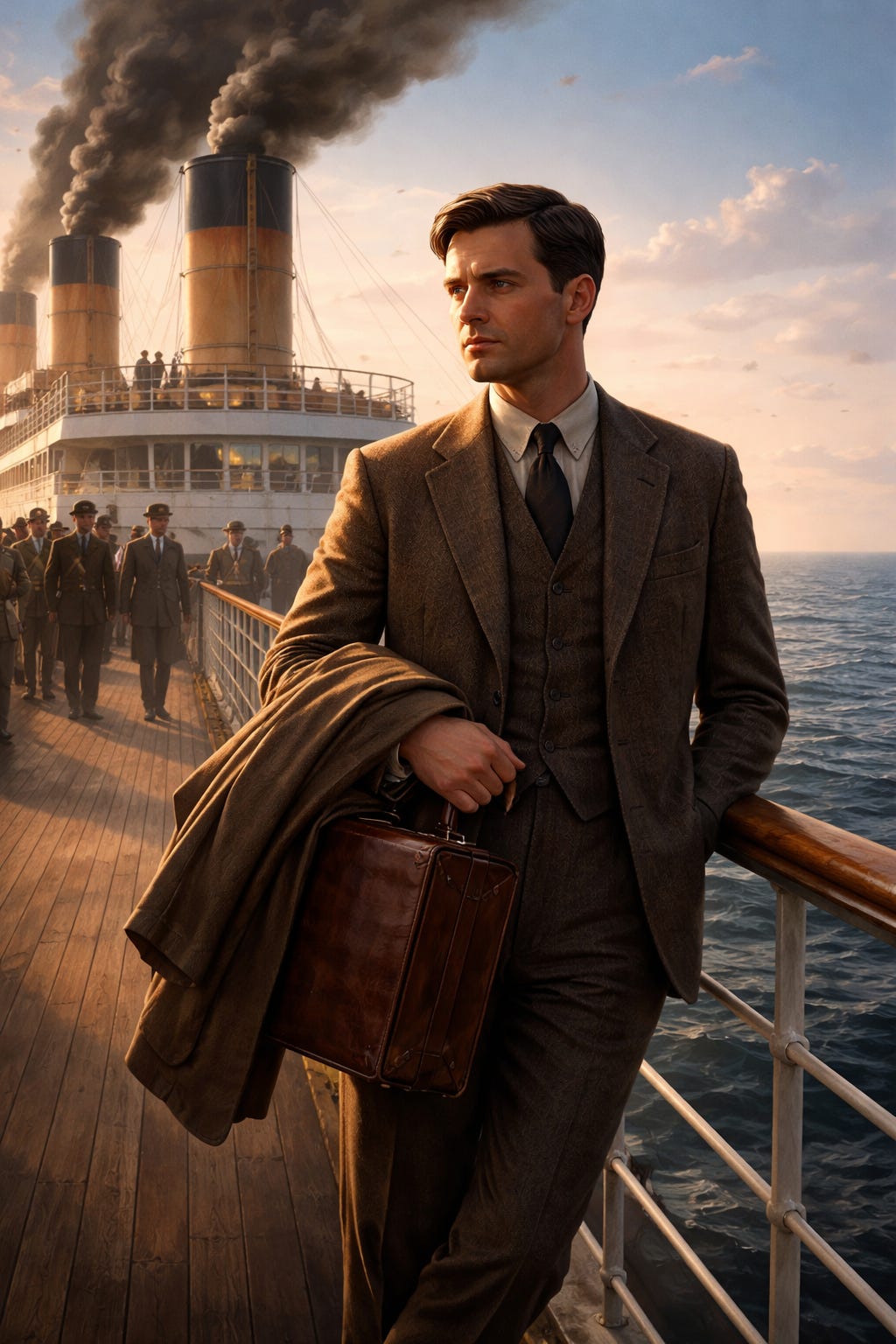
In late 1942, the brilliant mathematician and pioneering computer scientist Alan Turing traveled across the pond to visit the US.
This was no pleasure cruise, but instead a top-secret liaison over shared national security concerns that were both important and urgent. The Germans had developed what seemed like an unbreakable code system called Enigma. This code was created by a machine with rotating wheels (called rotors) capable of shifting the entire pathway a given letter transformed into.
In other words, Enigma changed itself every time you typed in a single letter. This would be a nightmare to decrypt, and Turing knew it. He would need help.
US Navy cryptanalysts had ramped up work quickly after the Japanese attack on Pearl Harbor a year earlier, but by the time Turing arrived, they were still unimpressive compared to Bletchley Park in the UK, which had been in operation since August of 1939.
Nevertheless, Turing shared a great deal of code-cracking concepts with the Americans, and the US Navy shared information about state-of-the-art communication technology they had available. The exchange was a bit tense at times, but in the end, the information each side got ultimately helped them win the war.
This was a major inflection point in UK-US relations. There had been at least a few other equally notable moments.
There’s the grandmother of all inflection points, the American Revolution. Here, spies from what would become the US worked directly against their British counterparts. The TV show Turn: Washington’s Spies does double duty for me: it tells this story well, and since it was filmed near Richmond, it has a couple of our BJJ students making appearances as extras.
Fortunately, a tentative peace was attained and a grudging respect from Britain to the new nation formed into a productive trade relationship.
Then, the War of 1812 reignited those old tensions as the UK and US once again tried to kill one another. It took another five decades for the relationship to finally become truly friendly, with the Treaty of Washington in 1871 marking a notable departure from hostilities.
Things gradually improved until Turing’s tour, when the two nations became much closer. Are we at another one of those big inflection points right now?
Great story, but ChatGPT totally messed up the historical accuracy in that image. The man looks nothing like Benedict Cumberbatch.
Gary North, a Christian Reconstructionist, wrote about how the change from Articles of Confederation to the Constitution was a second revolution because the federal government was elevated over state. By going to the individual to vote on the constitution rather than having the state governments ratify the constitution did an end run around the states.
We have had massive changes in government before that changed people’s relationship to government without resulting in civil war: FDR responding to the Great Depression, LBJ and minority rights, Reagan and the movement away from union power and towards management power. The current antithesis is off the thesis of multiple minority movements of gender and sexual orientations, NGOs, xenophobia, minority rights vs majority might.
I hope that just as quickly as most of these changes are being implemented, they can be backed out. I’m not sure that going back to a previous trajectory is always viable.